Curator and spiritist Holly Bynoe reflects on the expansion of Obeah, a belief system of the Caribbean Black communities, and its relationship with women and their ancestral heritage to continue exercising care in the face of colonial extermination.


For Charlotte, Bessie, audre, and for all of our grandmothers who fought in silence
“This is the urgency: Live!
and have your blooming in the noise of the whirlwind.
Salve salvage in the spin.
Endorse the splendor splashes;
stylize the flawed utility;
prop a malign or failing light–
but know the whirlwind is our commonwealth.”
— Gwendolyn Brooks, The Second Sermon on the Warpland
I.
With the arrival of a new epoch, the Anthropocene,[5] the stage is set for horror, but the will, memory, gifts, and agency of our ancestors give us an opportunity to chart a new course and a path to the willingness of life.[6]
II.
“No action in the present is
an action planned with a view of its effect on the future.”
— Jamaica Kincaid, A Small Place
Our ancestors were revolutionaries, philosophers, creatives, Nobel laureates, activists, scientists, world-class professionals, and politicians with slippery tongues who called for truth, justice, protest, and equanimity during the dawning of our postcoloniality.[7] They comprise the Indigenous, bush doctors, witches, grandmothers and grandfathers full to the brim with lore and story, healers, magicians, sages, alchemists, ethnobotanists, and curanderos and curanderas making medicine from the land to help their communities heal. Others make medicine to cripple the inner workings of the plantation and its doctrines of white supremacy, racism, violence, and oppression.
In its mercurial vitality, Obeah provides us with ritualistic magic around the renegotiation of care; it provides tools of visualization and discipline to see beyond the remnants of empire and helps us envision the damage of Western dominance and indoctrination.
Its technology provides access to the sacred feminine energies of Mother Earth and is a tool through which we can heal generational and, in particular, colonial traumas. One of the most important aspects of Obeah is the acknowledgment of the ancestors and ancestral veneration. Another is the fact that at times, it can be so large and undefinable that it can encompass anything involving spirit and supernatural phenomena. However, it anchors the self within a lineage of ancestral energies—energies that are intangible, albeit powerful if one believes.
Each medicinal field of wild botanicals, every elixir, potion, and earthy concoction or rub contained that energy and that of all grandmothers before them. Despite lands being razed, partitioned, and controlled, the experience of the medicine lives on within blood; within the memory of our very beings. This is where Obeah, even if abstract, becomes very real. Despite the centuries of attack, extraction, and depletion, the Great Mother is all-powerful and able to heal herself through divine will and communication to continue the proliferation of medicines and healing.
Grandmothers have access to this regenerative power and have wielded it for centuries to survive and to thrive. Women artists are wielding that power to bring to life grandmothers of the past, some of which have crossed the watery grave in suspension, under pressure from the weight of history, unable to breathe. Yet they are still present through the remnants of stacked clay; their bones and marrow evidence of the survival and the trickery. Their wombs were places for negotiation, reason for which Obeah became an agent in the colonial construction of gender that positioned women within an evolving system of biopolitical control specifically targeting Black mothers.[13] It is worth highlighting that Obeah gave enslaved women the opportunity to control their reproductive capacities using the knowledge within African traditions, thereby giving them power to resist the theft of women’s reproductive labor and all-around productivity on the plantation.
III.
“Human beings are magical. Bios and Logos. Words made flesh, muscle, and bone animated by hope and desire, belief materialized in deeds, deeds which crystallize our actualities. And the maps of spring always have to be redrawn again, in undared forms.”
— Sylvia Wynter
Today, medicine continues to thrive despite bioprospecting and through a global war against climate collapse,[17] where we are seeing the swallowing and reclamation of low-lying territories and heritages by the sea. The vulnerabilities of Small lsland Developing States are exposed on a global stage[18] and the struggle to become medicine-secure is occurring in parallel with the advent of carbon credit markets[19] in a time where biodiversity losses are at a peak.[20] We are entering into what media theorist Joanna Zylinska calls a moment of messianic-apocalyptic undertones and masculinist-solutionist ambitions,[21] evolutionary traits, and habitual colonial tactics.
Women—or any body feminized by the aforementioned colonial tactic—have always been able to see these maneuvers, and have used their divine feminine intuition and mystery when new legislation comes into place affecting families, body politics, and freedoms.
Women weaponize and strategize against the onslaught using second sight, speculation, and maternal instinct. This second sight isn’t suspicious, as it involves listening into the quiet parts of living; it is experiential, personal, and collective. It comes across in the medium of intuition, within the arms of Spirit, and across the love of sisterhood to give us warning.
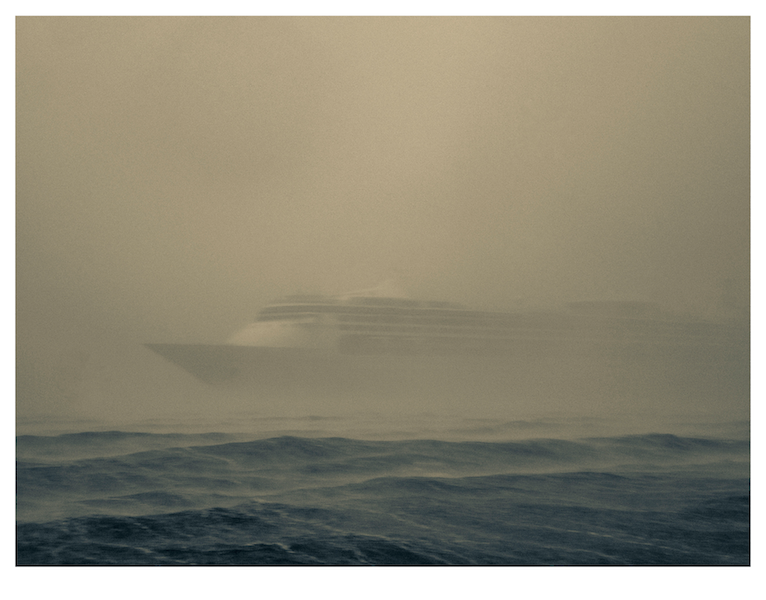
The malevolence of attempting to colonize nature is something that we live with. We saw it in the erudite fortress of the plantation and its current ruin. We see it reoccur in the birth of the all-inclusive resort through the one-track tourism industry, and through this extended pause with ghost ships dumping poison across our archipelago’s horizons and becoming fragile emotional homes for Caribbean citizens during the pandemic.
The medicines learned from our ancestors through the system of Obeah can inform a new, intangible arsenal, and provide us with a cartography as new properties, lines of knowledge, life force, traditions, and rituals are dreamt, imagined, and recovered.
I suggest that the discipline and knowledge within Obeah might help us to bypass this dark territory, analogous to igniting our collective dream space and visioning very much in the same way as the spiritual technologies that thrived during the watery passages across the Black Atlantic, and the sentience that moves through the graveyards that we forge passage through daily.
They are contorting, inventing new words and mythologies, and elevating beyond the trickster to accomplish entry into places previously malevolent. They are infecting institutions, making them sick with the promise of diversity, racial equity, and social justice. They are stretching seams with provocations around Black Lives Matter and using their imaginations to configure alternative futures where the corporeal and imaginative space can align. These strategies can be likened to Obeah.
This ritual healing via plant medicine, divining, and being in service to Spirit and the ancestors has forged alternative platforms and pathways that resist the energetic exhaustion and extortion that our region faces. It does not come as any surprise that after centuries of colonization and, afterward, decades of negligence and corrupt governance, we’ve developed phenomenological resiliencies for our survival.
I grew up on Bequia, the largest Grenadine island belonging to St. Vincent and the Grenadines. Famed feminist, womanist, mother, conjurer of words and elegy, and civil rights activist Audre Lorde’s mother came from Carriacou, a Grenadine island belonging to Grenada, a mere 40 miles south of Bequia. Her father, hailing from Barbados, 114 miles to the east, migrated to New York in 1924 at the peak of the century when Afro-Caribbean people were leaving the region in droves.[24]
Grandmother Audre’s practice was shamanic and prophetic. As an ancestor looking over us, I know that somewhere, somehow, she is crafting words of affirmation to deepen our survival, balm to care for our weary hearts, and salves to call in the tenacity and essence of resistance.
Curator and spiritist Holly Bynoe reflects on the expansion of Obeah, a belief system of the Caribbean Black communities, and its relationship with women and their ancestral heritage to continue exercising care in the face of colonial extermination.
For Charlotte, Bessie, audre, and for all of our grandmothers who fought in silence
“This is the urgency: Live!
and have your blooming in the noise of the whirlwind.
Salve salvage in the spin.
Endorse the splendor splashes;
stylize the flawed utility;
prop a malign or failing light–
but know the whirlwind is our commonwealth.”
— Gwendolyn Brooks, The Second Sermon on the Warpland
I.
With the arrival of a new epoch, the Anthropocene,[5] the stage is set for horror, but the will, memory, gifts, and agency of our ancestors give us an opportunity to chart a new course and a path to the willingness of life.[6]
II.
“No action in the present is
an action planned with a view of its effect on the future.”
— Jamaica Kincaid, A Small Place
Our ancestors were revolutionaries, philosophers, creatives, Nobel laureates, activists, scientists, world-class professionals, and politicians with slippery tongues who called for truth, justice, protest, and equanimity during the dawning of our postcoloniality.[7] They comprise the Indigenous, bush doctors, witches, grandmothers and grandfathers full to the brim with lore and story, healers, magicians, sages, alchemists, ethnobotanists, and curanderos and curanderas making medicine from the land to help their communities heal. Others make medicine to cripple the inner workings of the plantation and its doctrines of white supremacy, racism, violence, and oppression.
In its mercurial vitality, Obeah provides us with ritualistic magic around the renegotiation of care; it provides tools of visualization and discipline to see beyond the remnants of empire and helps us envision the damage of Western dominance and indoctrination.
Its technology provides access to the sacred feminine energies of Mother Earth and is a tool through which we can heal generational and, in particular, colonial traumas. One of the most important aspects of Obeah is the acknowledgment of the ancestors and ancestral veneration. Another is the fact that at times, it can be so large and undefinable that it can encompass anything involving spirit and supernatural phenomena. However, it anchors the self within a lineage of ancestral energies—energies that are intangible, albeit powerful if one believes.
Each medicinal field of wild botanicals, every elixir, potion, and earthy concoction or rub contained that energy and that of all grandmothers before them. Despite lands being razed, partitioned, and controlled, the experience of the medicine lives on within blood; within the memory of our very beings. This is where Obeah, even if abstract, becomes very real. Despite the centuries of attack, extraction, and depletion, the Great Mother is all-powerful and able to heal herself through divine will and communication to continue the proliferation of medicines and healing.
Grandmothers have access to this regenerative power and have wielded it for centuries to survive and to thrive. Women artists are wielding that power to bring to life grandmothers of the past, some of which have crossed the watery grave in suspension, under pressure from the weight of history, unable to breathe. Yet they are still present through the remnants of stacked clay; their bones and marrow evidence of the survival and the trickery. Their wombs were places for negotiation, reason for which Obeah became an agent in the colonial construction of gender that positioned women within an evolving system of biopolitical control specifically targeting Black mothers.[13] It is worth highlighting that Obeah gave enslaved women the opportunity to control their reproductive capacities using the knowledge within African traditions, thereby giving them power to resist the theft of women’s reproductive labor and all-around productivity on the plantation.
III.
“Human beings are magical. Bios and Logos. Words made flesh, muscle, and bone animated by hope and desire, belief materialized in deeds, deeds which crystallize our actualities. And the maps of spring always have to be redrawn again, in undared forms.”
— Sylvia Wynter
Today, medicine continues to thrive despite bioprospecting and through a global war against climate collapse,[17] where we are seeing the swallowing and reclamation of low-lying territories and heritages by the sea. The vulnerabilities of Small lsland Developing States are exposed on a global stage[18] and the struggle to become medicine-secure is occurring in parallel with the advent of carbon credit markets[19] in a time where biodiversity losses are at a peak.[20] We are entering into what media theorist Joanna Zylinska calls a moment of messianic-apocalyptic undertones and masculinist-solutionist ambitions,[21] evolutionary traits, and habitual colonial tactics.
Women—or any body feminized by the aforementioned colonial tactic—have always been able to see these maneuvers, and have used their divine feminine intuition and mystery when new legislation comes into place affecting families, body politics, and freedoms.
Women weaponize and strategize against the onslaught using second sight, speculation, and maternal instinct. This second sight isn’t suspicious, as it involves listening into the quiet parts of living; it is experiential, personal, and collective. It comes across in the medium of intuition, within the arms of Spirit, and across the love of sisterhood to give us warning.
The malevolence of attempting to colonize nature is something that we live with. We saw it in the erudite fortress of the plantation and its current ruin. We see it reoccur in the birth of the all-inclusive resort through the one-track tourism industry, and through this extended pause with ghost ships dumping poison across our archipelago’s horizons and becoming fragile emotional homes for Caribbean citizens during the pandemic.
The medicines learned from our ancestors through the system of Obeah can inform a new, intangible arsenal, and provide us with a cartography as new properties, lines of knowledge, life force, traditions, and rituals are dreamt, imagined, and recovered.
I suggest that the discipline and knowledge within Obeah might help us to bypass this dark territory, analogous to igniting our collective dream space and visioning very much in the same way as the spiritual technologies that thrived during the watery passages across the Black Atlantic, and the sentience that moves through the graveyards that we forge passage through daily.
They are contorting, inventing new words and mythologies, and elevating beyond the trickster to accomplish entry into places previously malevolent. They are infecting institutions, making them sick with the promise of diversity, racial equity, and social justice. They are stretching seams with provocations around Black Lives Matter and using their imaginations to configure alternative futures where the corporeal and imaginative space can align. These strategies can be likened to Obeah.
This ritual healing via plant medicine, divining, and being in service to Spirit and the ancestors has forged alternative platforms and pathways that resist the energetic exhaustion and extortion that our region faces. It does not come as any surprise that after centuries of colonization and, afterward, decades of negligence and corrupt governance, we’ve developed phenomenological resiliencies for our survival.
I grew up on Bequia, the largest Grenadine island belonging to St. Vincent and the Grenadines. Famed feminist, womanist, mother, conjurer of words and elegy, and civil rights activist Audre Lorde’s mother came from Carriacou, a Grenadine island belonging to Grenada, a mere 40 miles south of Bequia. Her father, hailing from Barbados, 114 miles to the east, migrated to New York in 1924 at the peak of the century when Afro-Caribbean people were leaving the region in droves.[24]
Grandmother Audre’s practice was shamanic and prophetic. As an ancestor looking over us, I know that somewhere, somehow, she is crafting words of affirmation to deepen our survival, balm to care for our weary hearts, and salves to call in the tenacity and essence of resistance.